
Next.js & React Web App Development
Next.js apps that stay fast after the second feature
Most React apps are quick on launch day. The interesting part is what happens at feature twelve, when every new panel fetches on the client and the page spends its first second drawing skeletons. That is the problem I design for from the first commit.
- Framework
- Next.js (App Router), React 19
- Language
- TypeScript
- Styling
- Tailwind CSS v4, design tokens
- Data
- REST APIs, TanStack Table, server caching
What the build includes
App Router architecture with the server/client boundary drawn per component rather than per page
TypeScript at the data boundary, so an upstream shape change is a build failure instead of a wrong number on screen
Third-party and internal API integration with caching, cancellation and real failure states
A Tailwind design system built as a fixed scale, so the twentieth screen still looks like the first
Prerendering, metadata and Core Web Vitals handled as part of the build rather than bolted on afterwards
Work that shows it
Each of these is a full case study — the problem, what I built, and the technical decisions behind it.
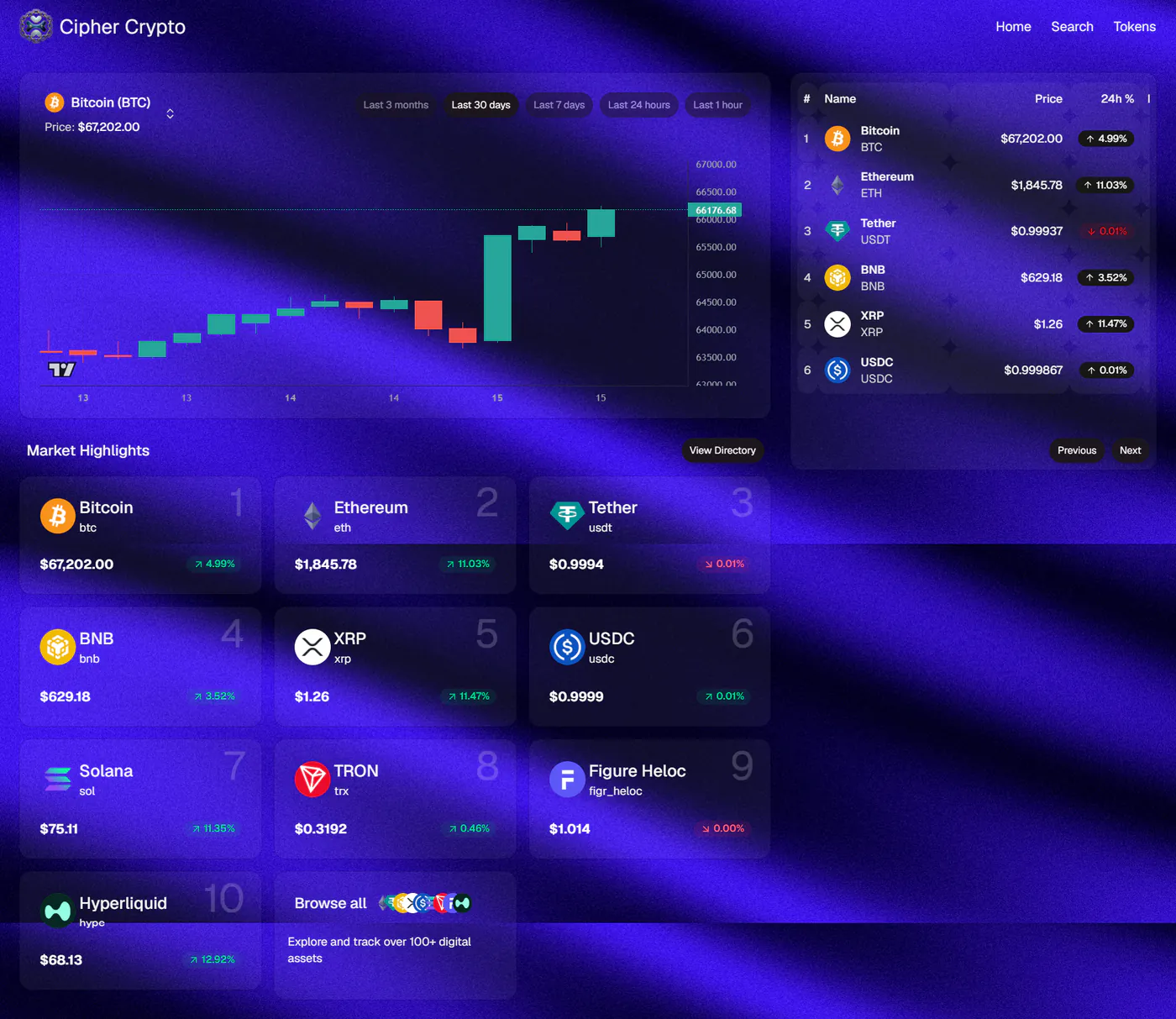
CipherTrade — Crypto Market Dashboard
A dark crypto dashboard in Next.js 16 and React 19 — live CoinGecko prices, TradingView candlesticks, Recharts areas and sortable drag-and-drop tables.
Next.js 16React 19TypeScriptTailwind CSS v4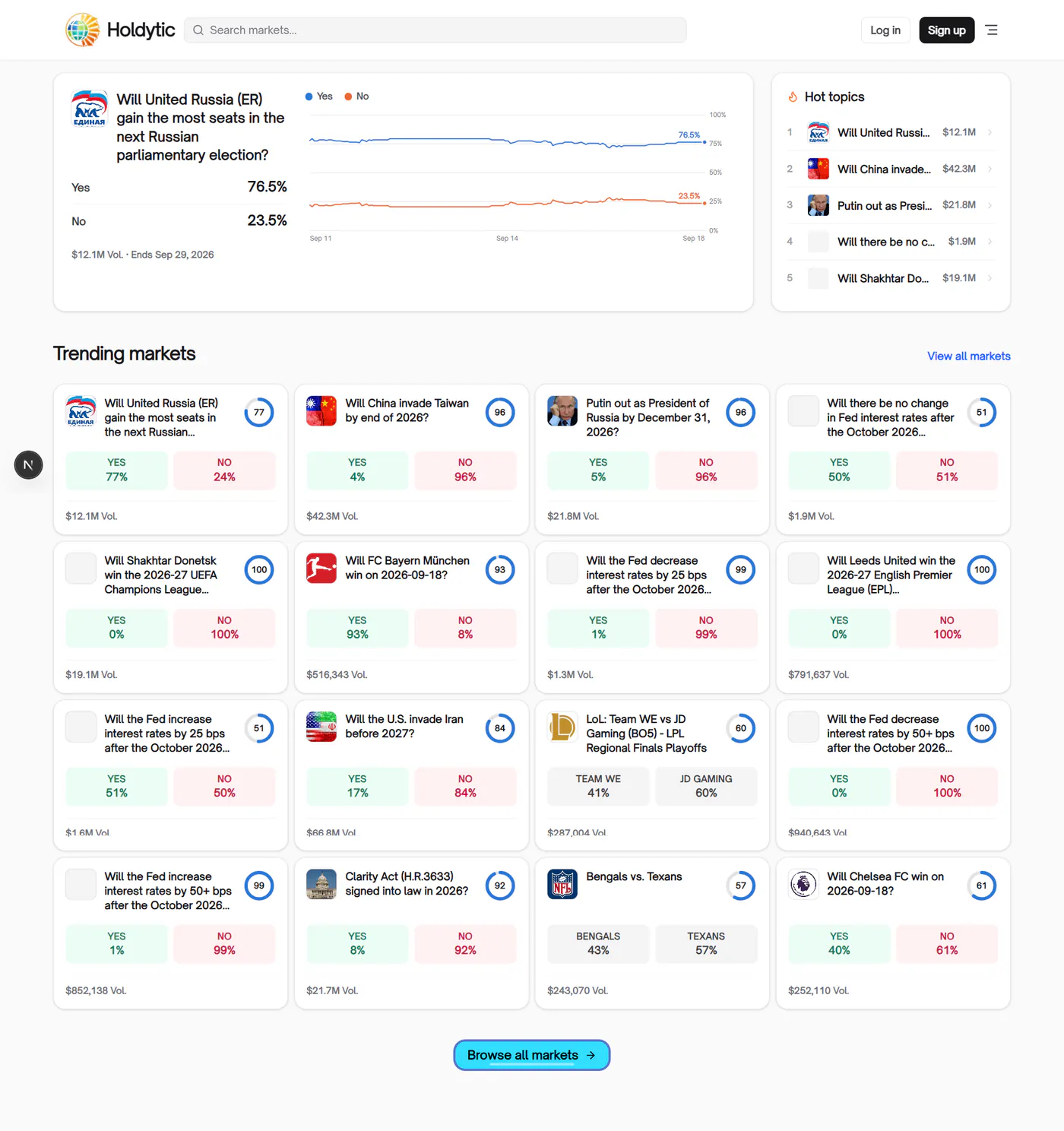
Holdytic — Prediction Market Explorer
A Next.js 16 explorer for Polymarket data: live odds and volume, price charts in plain SVG, order books, and an accuracy page that scores past market prices.
Next.js 16React 19TypeScriptTailwind CSS v4
Arbiris — Deterministic Agentic Intent Infrastructure
A Next.js and Sanity CMS platform for agentic infrastructure — explaining hardware-rooted cryptographic proof to an audience that checks the claims.
Next.jsReact 19TypeScriptSanity CMS
Often part of the same project
Full-Stack SaaS & E-Commerce Development
End-to-end product builds — authentication and role-based access, payments confirmed by webhook, database schemas, file storage, and the dashboards on top of them.
Dashboards & Data-Heavy Interfaces
Admin consoles and market explorers — live data, charts, sortable tables, and a hierarchy that puts exceptions first instead of giving every panel equal weight.